International Webinar: Soil Biology & Water Harvesting

Date: February 19, 2015

Description:
Soil fertility is a function of the wide range of organisms living in the soil, such as earthworms, nematodes, protozoa, fungi, bacteria and arthropods. They all work together to decompose organic matter, solubilize minerals from rocks and form complex molecules and humus. Humus is the base of life again as it forms soil structure, acts as nutrient bank and forms a nurturing ecosystem for plants to grow healthy. Soil biology studies this complex ecosystem and the ecological functions that it performs.

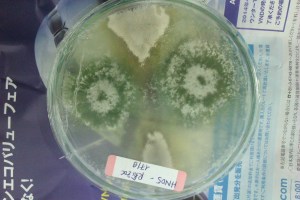
Soil fungi, blocking the growth of a pathogen. Vietnam 2014.

Soil moisture supports this microbial activity within the soil, which means that water harvesting and moisture management greatly affect soil fertility.

In this webinar, Ruben Borge discusses the basic principles and emerging concepts of soil biology relevant to agriculture. He also draws some relations to water harvesting, and their potential effects on soil life.

From crop calendar to business planning

Tanzanian farmers plan the application of organic fertilizers with a simple form of crop calendar. Together with the farmers we created a graphic that integrates all the activities of a season. This allows farmers to match their treatments and cultural activities as pruning and applications of mineral additives to rain season, crop development stages, and other periods of mayor incidences of pests and diseases. The photo shows a calendar for coffee (kahawa in Suahili)

Based upon this simple tool for planning activities we are able to start talking business with the farmers. this is because with this planning farmers build the bridge to start thinking in quantities of materials and ingredients and labor needed.

In june 2014, 25 farmers started a business planning course at coffee cooperative of Mbinga, Tanzania. The outcome of this course was a draft of a business plan that would allow farmers to join efforts to produce organic fertilizers and offer them to other farmers within their cooperative.

One year later, this business plan turned into real business as farmers are now producing  organic fertilizers for the first 100 customers and have a potential market of 1500 farmers and near 4000 hectares.


Life is back

Only one month after soil aeration in Raerd with the Evers plow, we find new signs of life are visible in the soil more root growth, earth worms, insects. We also see the effects of their work in the channels they leave in the soil. Soil drains better now

How we made it:

  1. Visual soil Assessment. This gave us an idea about what were the key constraints that affected the gras production. Heavy clay soils of Raerd need to be managed to allow root forming and avoid soil compaction.
  2. Assess the land and water management. We saw that with the current land management, the soil will tend to compact and create an environment with little air and water exchange. This environment would  stress the root and compromise the grass production.
  3. Designed a new fertility plan that include building soil structure in permanent grassland with structural help of the vertical plow. This use will compensate the imbalances of the use of machinery. Once the right soil conditions are created to allow successful biological settlement and nutrient cycle.