Assessing Soil’s microscopic work force

biodiversity in soils

test of biodiversity in soils

Life in the soil is the engine that moves nutrients. Resilient soils are living soils. Plants are at the highest levels of the soils trophic pyramid and depend on the soil food web to survive. Farmers quest to gain security on their harvest drive their attention to soil life.

For nutrient cycling and the crop resilience, soils with biodiversity perform better than soils with domination of one particular “beneficial” specie.  Still industry sells inoculates with specific functions. These specific inoculations tend to create imbalances in the soil and difficult  the natural nutrient cycling. Resilient healthy soils have great diversity in life in all its forms.

How to assess life in the soil?

In Rockin Soils we strive to provide farmers with quick-cheap-easy methods to assess the soils conditions

Indirectly these are the most common indicators:

  • Root density
  • Holes and signs of life.
  • Diversity in plants potential “hosts” of different forms of life.

Directly here we have a list of indicators to assess macro-live in the soil:

  • Macro-life in the soil as birds, moles that feed themselves with worms and insects.
  • Earthworms, type and quantity

To assess microscopic-life

  • Observation of fungal micelium in the crop rests
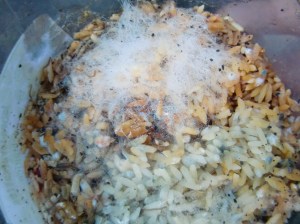
  • Rice-trap test gives an idea of the diversity of the fungi and bacteria of the soil. (photo)
  • Water peroxide test
  • Tea bag decomposition rate
  • Cow dung decomposition rate

Rockin Soils assists farmers to assess the soil life and to implement measures that enhance it. Rockinsoils helped to adapt the Visual soil assessment for the Netherlands. for more info look at http://mijnbodemconditie.nl/  (sorry, this site is only in Dutch)
Where the t(r)ees go green

During the construction of the Dirkshorn golf club the soil got destroyed by heavy machinery. After their work, engineers and bulldozers left a inert substrate where plants and especially had difficulties to grow.

Trees and shrubs are very important part of the course because they mark the field that players have to follow. After the first season more than half of the planted trees died or suffered severe damage. Supporting those trees with chemical fertilizers was not feasible. On the other hand a golf court generates a tremendous amount of green waste that need to be disposed. Getting rid of this waste is a cost.

Rockin Soils assists the the golf club and Grondmij, the company in charge of maintenance, to produce organic fertilizers from the organic waste to feed the young trees. Self made solid and liquid fertilizers inject indigenous forest life in the soils, improve their structure, re-mineralize them and restore the ecosystem that supports the settlement of the trees.

The pilots started in April 2013. From august 2013 until September 2013, the trees received three applications. Several tests are also carried out on grass of greens and tees. Results of the pilot are expected in the spring of 2014.

Reaching the trace-element age

A micro element to a plant is like a chip to a computer. As result of 60 years of N P K, our European

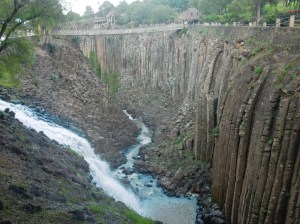
basaltic formation in Hidalgo, México

Basaltic formation in Hidalgo, México

soils are exhausted. Nowadays farmers are aware of the importance if micro-nutrients to ensure production and Industry sells them in small jars. They are the most expensive input in agriculture. 

In plants and animals micro nutrients are the key to endless enzymatic reactions, metabolic routes. They enable growth, development of flowers, fruits and seeds. The are not just an input to get quality product but there are essential to life. A decade ago this view was not so obvious.

First, industry created Urea, Phosphorus and Potash. After a few seasons, the first symptoms of crop deficiencies appeared. agricultural experts met. They agreed that calcium and magnesium and sulfur and silica were limiting the crop production. The market supplied, engineers calculated universities started to teach about these other “less important” elements.

Agro-minerals (basalt quarry at Solulta (Ethiopia)

Basalt quarry (Ethiopia)

Soon after, micro nutrients became the bottleneck. Iron, Zinc, Boron, Cobalt, Copper, Molybdenum, Selenium, manganese… Again the same response: Experts met, industry supply, sell and university teach to a new generation of micro element sensitive engineers.

Recent research points that the elements called rare earth elements play crucial role in the metabolism of plants and or symbiotic   microorganisms. Experts are meeting again. Industry is prepared already and so do Universities. The tendency now is to consider that crops need all elements, but in each one in the right proportion. Many igneous rocks in nature have high diversity of mineral elements in secondary and micro nutrients and can serve farmers to re-mineralize their soils in a affordable way.

Rocking soils works with farmers to build capacity, develop and share the skills to extract plant nutrients from rocks and regenerate exhausted soils.