Only one month after soil aeration in Raerd with the Evers plow, we find new signs of life are visible in the soil more root growth, earth worms, insects. We also see the effects of their work in the channels they leave in the soil. Soil drains better now
Visulal soil assessment Grassland
How we made it:
Visual soil Assessment. This gave us an idea about what were the key constraints that affected the gras production. Heavy clay soils of Raerd need to be managed to allow root forming and avoid soil compaction.
Assess the land and water management. We saw that with the current land management, the soil will tend to compact and create an environment with little air and water exchange. This environment would stress the root and compromise the grass production.
Designed a new fertility plan that include building soil structure in permanent grassland with structural help of the vertical plow. This use will compensate the imbalances of the use of machinery. Once the right soil conditions are created to allow successful biological settlement and nutrient cycle.
Rockin Soils works with Agriterra to organize a series of courses for farmer cooperatives in Southwest Tanzania, to improve the quality of maize, beans and Coffee with affordable organic inputs.
Conventional farming practices rely on chemical fertilizers and pesticides that most farmers cannot afford. Access to information about reliable self-made organic inputs is in high demand in Tanzania. The skill to upcycle farm refuses, recover nutrients and improve the soil is scarce and farmers end up in situations where they dispose or burn valuable resources and soon after they go for a loan to buy fertilizers.
With the application of Visual Soil Analysis (FAO, 2008) in the farms, we see that all the assessed farms have lost a good part of their Soil organic content. Giving the climatic conditions of the tropical areas, we estimate that the continued use of chemical inputs combined with the current farm practices of kill, harvest, dispose and burn, will lead to decrease of soil fertility in the short term. Less fertile soils will demand more external inputs and increase the risks (economical, ecological and social) of the farmers. While farmers dependency on external inputs grows, their capacity to cover the costs or access loans remains insufficient.
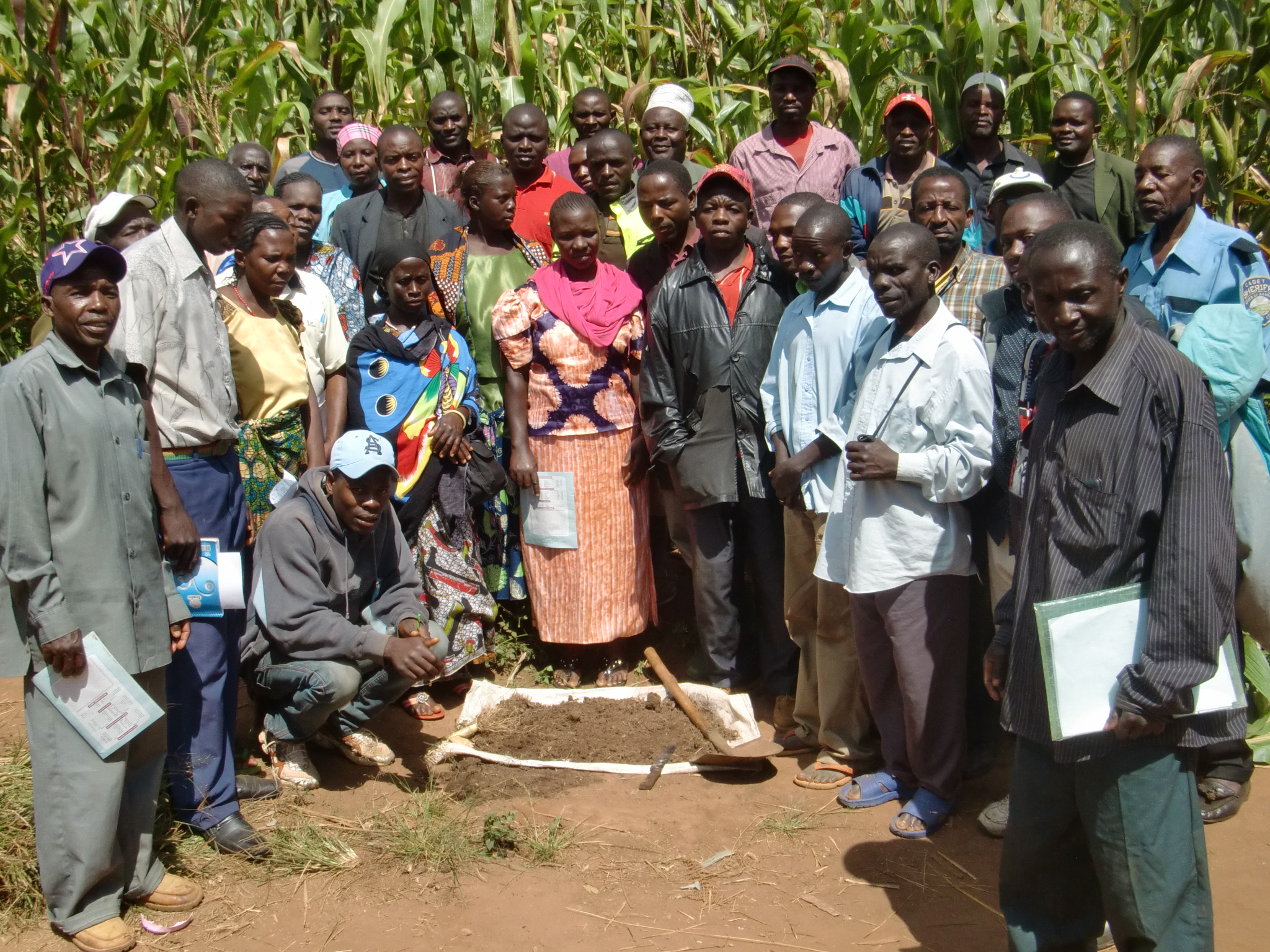
lab-less soil check carried out in the south of Tanzania
The regeneration of the farm soil is the logical strategy to ensure that farmer families can keep farming and make a living.
The courses integrate the simple lab-less techniques to assess the soil condition, the production of organic inputs and regenerative farm practices, nutrient recovery, water harvesting and moisture management. The more than 60 model farmers and local extension officers are optimistic about the potential of this approach for small farm operations, as well as for local commercial enterprises.
You can plow in a grassland. There is a new generation of super plows that build fertile soils increase the performance of pastures on the short term. Promising results of aeration plows show in compacted heavy clay soils.
Plant health is directly related to access of roots to air, water and nutrients, specifically in this order. Lack of air in the soil, means stress if not death. For this reason, roots do not go in to blue areas of the soil (blue color indicates lack of oxygen). Air in the roots is too often forgotten. When looking at the crop, agronomists and consultants pay more attention to water (irrigation) and nutrients (fertilization) than to air (aereation). Maybe because the air is for free.
Aereation is approached from two perspectives, each of them with a instrument: The physical (a plow) and the chemical, (calcium). Analyzing the physical tools, we find many plows in the market, some with specific functions.
Moldboard and turning plows have been designed to turn the soil and incorporate crop rests.
Rippers have been built to break the hard pan. They do that but they only tackle the symptom as hard pan is the consequence of bad soil management.
Mole plows are specific to make underground channels and drain water (and nutrients)
In our agricultural schools we learned that conventional plows aerate, though this effect do not last long and increase the compaction in the long run. In fact, conventional agricultural systems increase compaction of agricultural soils. The larger the plows, the larger the tractors. The larger the tractors, the larger the loans, the risk, the scale…
The ultimate plow is the not the one that aerate for this season and makes you dependent for the rest of ages. The ultimate plow is the one that build fertile soils. How? by enhancing the natural process of forming structure: (1) leading roots to to their jog and go deeper and (2) allow gentle aeration but limiting the oxidation of the humus in formation to allow accumulation of organic soil matter.
Bringing air in the soil with minimal soil disturbance is a challenge for farmers. In 1960’s Australian, P.A. Yeomans developed a plow specific to restore grassland. The Yeomans plow brings air in the root system without disturbing the grassland. This plow has been used for 4 decades years in thousands of hectares, continuously improved and the results in regenerating grassland are just spectacular. It is designed in such a way that light machinery can pull it. (see video)
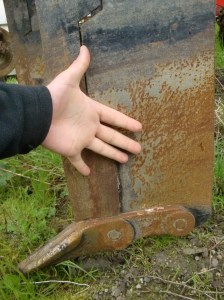
In Germany, the company Evers developed a similar plow (see photo). A few weeks Rockin soils visited an innovative Dutch company leading the technique of soil aeration of Dutch pastures in heavy clay soils. The use of this type of plow in Europe is not widespread. First results in the province of Friesland are promising. and new tests are coming this year.
Rockin soils participates actively in these trials, to exchange experiences from farmers in Europe and outside and get the best of this tool of fertility in our pastures. From Australia we know that we can bring roots down to 60 cm in 3 year time in poor soils. The question is: can we do it here in the rich soils here?


 ROCKINSOILS