Zinc scarcity for who?

baby volcanosUS Geologists are warning that we may face scarcity of traze-elements. They say reserves of Zinc will be the first to be emptied within only 21 years (USGS). Zinc is scarcer than phosphorous.

Zinc is an essentiatrace element, necessary for plants, animals, and microorganismsZinc is found in hundreds of specific enzymes... It is “typically the second most abundant transition metal in organisms” after iron and it is the only metal which appears in all enzyme classes.” Wikipedia,18/10/2013. In other words, Zinc is quite important for life in the planet as we know it now. 

Agricultural experts point to the dangers of scarcity of this element for agriculture and public health. After 60 years of green revolution agricultural soils lack zinc among other trace-elements. Crops, animals and humans are more than ever sensitive to new diseases. Public opinion is sensitive and decision makers at top levels mobilize resources to tackle this new threat. 

Scarcity or abundance?


Armin Reller of the University of Augsburg

Source: Infographic by Armin Reller of the University of Augsburg and Tom Graedel of Yale University.

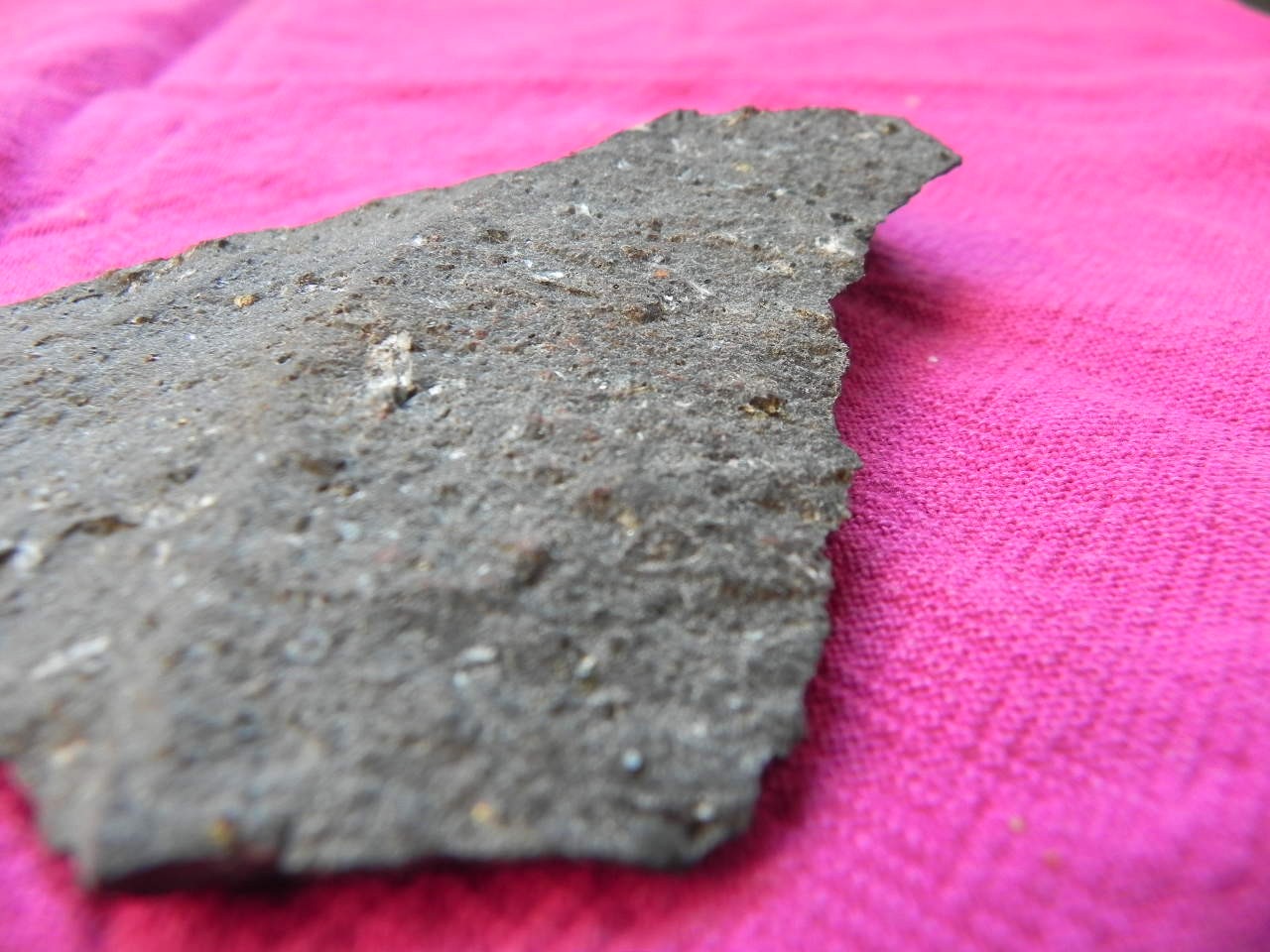
Zinc as all other elements do not go anywhere after plants, animals and humans use them. They stay in the planet, normally accumulated in land fields , mixed in toxic concentrations or lixiviated. The Canadian Geologist Peter van Straaten, shows that Zinc is abundant in many rocks and soils in the earth. Zinc is actually the 24th most abundant element on the earth crust (Wikipedia,18/10/2013)

Scarcity refers to the difficulty of the industry to isolate a element with their current resources (money and technology). Isolation of micro nutrients is only interesting for industry (mainly for galvanizing processes, for batteries or making many alloys). Scarcity affects also to the fertilizer industry is also interested in isolated zinc to bottle it and sell it.
CIMG3911

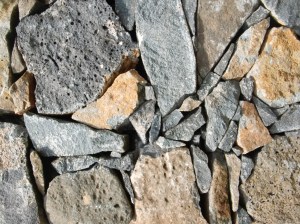
On the contrary, isolation is not desirable for the farmers. Therefore, scarcity for industry is not the same as scarcity for agriculture. Farmers prefer to have low concentrations of micro nutrients in the soil and well balanced proportions to avoid toxicity. Hence for agriculture there is not such scarcity of Zinc. Basalt rocks and Shale have on the average 100 mg/kg of zinc. Granite has 40 mg/kg. Farmers can apply zinc only adding rock dust to the soil (van Straten, 2007). This zinc might not be bio-available to plants but it can be easily extracted by soil microorganisms. The scarcity is in the educational programs that do not train farmers nor engineers to make abundant agro-minerals available to plants.

Rocking soils support farmers to develop their own strategies with simple technology to achieve self-supply of nutrients and water. Technology affordable to all pockets of all countries. A farmer who spread rock dust in a living soil (with air, water and organic matter) will have no problems with Zinc.

Lab-less soil check

Farmers that keep their soils fit require less inputs and assume less financial risks. Visual Soil Assessment (VSA) help farmers to determine the condition of their soils without lab.

When it comes to farming, Improving soil has the highest return on investment. Knowing the soil and how to interact with it has top priority for the farmer of the future.

WP_000556

Knowledge is out there…

Nowadays practical knowledge of the soil is int in the farm. It is segmented among a cloud of consultants. These consultants are linked to commercial firms that sell agricultural inputs. They never get the hands dirty but they know how to link soil analysis to the products they sell. Independent consultants have little place in this market of free advice and expensive products. After 60 years of industrial agriculture knowledge is gone it only remains sales. As consequence, farmers do not have objective information. Visual Soil Analysis (VSA) provide direct and objective information to farmers about the soil and help to make integrated decissions to improve the farmer’s natural capital.

Farming or paperwork?

To know about soil, modern farmers rely on lab analysis. They put the soil sample in a bag, fill a form and send both things to the lab by post. It is easy.Lab soil analysis reports contain a long list of parameters. These parameters mean nothing if they aren’t are interpreted by consultants that know that is normal and what not. These consultants live far away from the farm and have never seen it. They work for farmers but spend more than 90% of their time in the lab among computers and coffee dispensers.

With these soil analysis other consultants and fertilizer re-sellers make fertilization schedules. This second type of consultants know more about products. they see chemical deficiencies and put a combination of commercial product behind to solve the problem. They also live far away from the farm. They do not even see the soil samples. It is just paperwork. At the end farmers get a pile of papers, numbers invoice and no recomendations but a shopping list to put some tons/ha of this and many other tons/ha of that. They buy the products and contract laborers to apply them. Nobody knows what happen in the soil until the next season time farmer goes to the lab with another bag, and gets the next shopping list. If the soil would get any better, we might expect that the shopping list shorter is or the costs go down but the experience tell us that during the last 60 years the inputs only go up and yields only go down.

The European “modern” farmer is so busy paying bills and applying for subsidies, that he/she has little time to farm. He/She has little time to have a look in the soil and to realize that mainly bad soil is a synonymous of a hole in the pocket. The main productive factor of agriculture is forgotten.

Farmers can do it themselves

Any farmer that work close to their land know when a soil is good or when it is in trouble. They perceive the tinniest differences in performance. But often, they cannot point to the causes and rely on external expertise.CIMG3866

The VSA was developed in New Zealand by Mr Graham Shepherd. With a Shovel and a field guide, they can survey the soil tehmselves with their own eyes. VSA gives insight about:

  • Soil Organic content
  • Structure
  • Soil life
  • Root development
  • Hard pan
  • Land cover
  • pH
  • Redox

Rockin Soils works to test this method in the Dutch dairy farms. In the Netherlands VSA is called Bodem Contitie Score (BCS). At this moment VSA helps Duth dairy farmers to assess the condition of grass and maize in the area of the Beemster to improve the soils.

Be the first to know your soil

If you want to learn to asses your soil, to start improving the natural fertility, you can contact rockinsoils.

More about VSA, visit

Rocks 4 Life

The art of dissolving rocks to feed plants is a basic skill any farmer must have to produce a lot healthy crops for a long time. Volcanic rock dust is the source of many minerals that most of our soils are missing.  Because the soils miss the minerals, the plants miss them too and so do our cattle and so do we.

If we put rock dust directly in the soils it works as soil amendment but it has slow results on plant nutrition.  Before rocks can feed plants, they need to be transformed by the microbiology of the soils. They have to be made bio-available.   DSCN1047

How to get rocks:

Many rock mixtures can be bought at special agricultural stores. When a mineral has good potential application for agriculture it is labelled as agro-mineral. Rock dust suppliers take the best agro-minerals and mix them in different proportions to create their commercial recipes. What make a rock good for the crops?

The most fertile soils on earth are volcanic soils. they have the highest mineral diversity. Basically the most important factor of a rock to improve soils is the diversity of minerals, in the right proportions in a way that they allow they support the development of life in the soil. The more mineral diversity in the rocks we use, the more elements of the periodic table will be able to be embodied in a bacteria or fungi, passing to the soil food web the more fertile the soil is.  One of the rocks with more mineral diversity are the basaltic rocks.

How to dissolve minerals:

Rocks in soils undergo a serie of processes before they release minerals. The first process is erosion, then it comes the bio-assimilation. The process of erosion and bio-assimilation take thousands of years. We can mimic this process and accelerate the mineral release and take advantage of it (biomimicry). We mimic erosion when we crush rocks.

SAM_0230

We mimic the natural bio assimilation in the soils when we put soil microorganisms in contact with rock dust. Bacteria, fungi and yeasts use organic acids and enzymes that extract minerals from rocks. 

Dissolving rocks with microorganisms in own farm does not require high investments nor complicated technology. Small Bio-digesters can be mounted in reduced spaces where experimenting is easy and affordable to any farmer.

CIMG0888

The art of reproducing microorganisms to dissolve minerals from rocks is a simple but powerful tool in hands of farmers. It can bring fertility to soils an accelerate the chemical and biological rehabilitation of exhausted soils.

It is a strategy that any farmer can experience. In my vegetable garden, I produce and test my fertilizers on a small scale. I test them in vegetables and fruit trees. If I like the results, scaling-up is always possible.

Thousands of farmers in South America know how to make their own rock dust based fertilizers and are able to feed their crops. They do not depend from external inputs but they increase production and quality of their products and leave better soils for their children.